
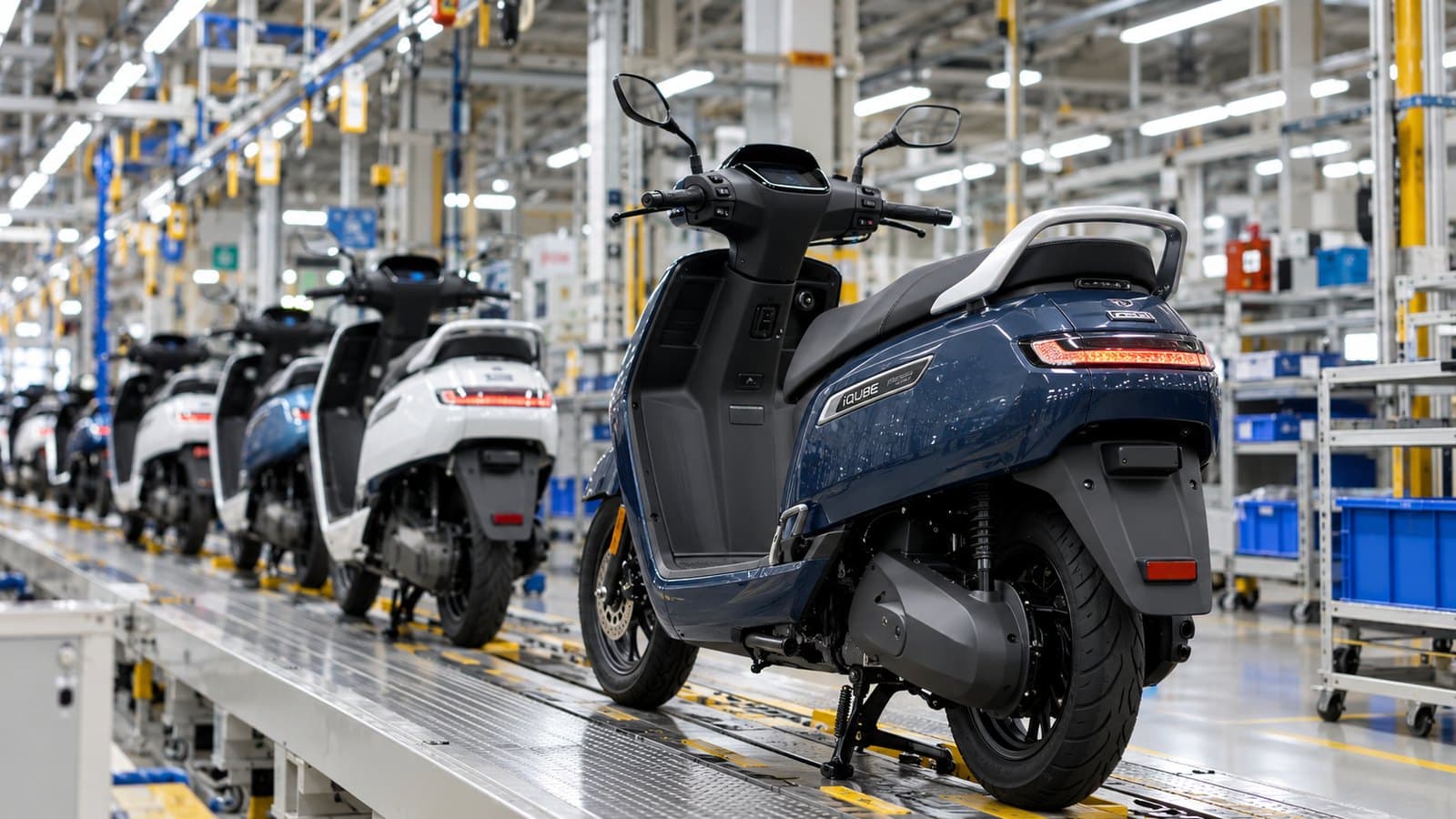
Representative image (AI-generated)
TVS wants its factories turning out 80,000 electric scooters every month once March 2027 arrives. Today the number is 60,000 to 65,000. That is 15,000 to 20,000 extra scooters leaving the factory every month, from the brand that already sells more electric two-wheelers than anyone else in India. CEO KN Radhakrishnan laid out the TVS electric scooter capacity plan for investors after the company's Q2 FY27 results on 29 October.
The demand is real, and the data shows it
TVS sold 1,86,186 electric two-wheelers in the July-September quarter. A year ago that number was 80,009. Domestic EV sales grew 129% in the quarter while the overall industry grew 84%, so TVS is pulling ahead of a market that is itself running hot. Across the first half of FY27, the electric two-wheeler industry grew about 75%.
The penetration figure is the one worth remembering. Electric vehicles are 11-12% of all two-wheelers sold in India. In scooters alone, they have crossed 20%. One in five new scooters sold in this country is now electric.
Three companies, one plan
TVS is not alone in this. Look at what the top three are doing:
- TVS: 60,000-65,000 a month now, heading to about 80,000 by March 2027
- Bajaj: just over 62,000 Chetaks a month now, heading to close to 80,000 in the January-March 2027 quarter
- Ather: about 33,000 a month, raising Hosur past 41,000 and adding capacity at AURIC
We covered the Bajaj Chetak capacity plan and Ather's supply gap separately. Put the three together and the picture gets interesting.
TVS and Bajaj alone are planning about 1.6 lakh scooters a month between them. For scale, India's entire electric two-wheeler market has averaged roughly 1.77 lakh units a month in 2026 so far (about 17.7 lakh registrations over roughly ten months). Two companies are building for almost the size of today's whole market.
What this means for you
If you have been waiting on a colour or a variant, next year should be easier. More capacity usually means shorter delivery times and fewer "that model is on a two-month wait" conversations at the showroom.
It should also mean better deals. When three brands have more scooters than the month's orders, the pressure moves from the buyer to the seller. That is when festive offers stop being token discounts.
The EVGyan take
Capacity promises are easy on an earnings call and hard on a shop floor. Bajaj has been knocked back twice by supply problems in about 15 months, once by a rare-earth magnet shortage.
The honest read: this is a bet on demand that has not arrived yet. If scooter penetration keeps climbing past 20%, these factories will look well timed. If it flattens, three companies will be sitting on a lot of idle line. Right now the registration trend says the bet is a reasonable one.
Get India's monthly EV sales data by email
Every month we pull the Vahan registration numbers apart — by segment, by state, by model — and send you what actually changed. No brand pressure, no hype.
One email a month. Unsubscribe anytime. See our privacy policy.
Read next
On This Page
Latest
- Accelero's eBik Jumps From 3,000 to 12,000 Units a Year
- CATL Is at 2,520 Swap Stations and Wants 3,000 by December
- China Exported 582,000 EVs in October, 16x India's Market
- China Rare Earth Curbs Delayed to 10 January: India's EVs Get 60 Days
- Force Traveller EV Arrives Q1 2027, ₹3,000 Crore Behind It
- Honda Ohio Plant: $3 Billion for Hybrids, Not EVs
- HPCL EV Charging Network Now 5,981 Points, 176 for Swapping